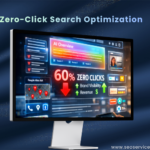
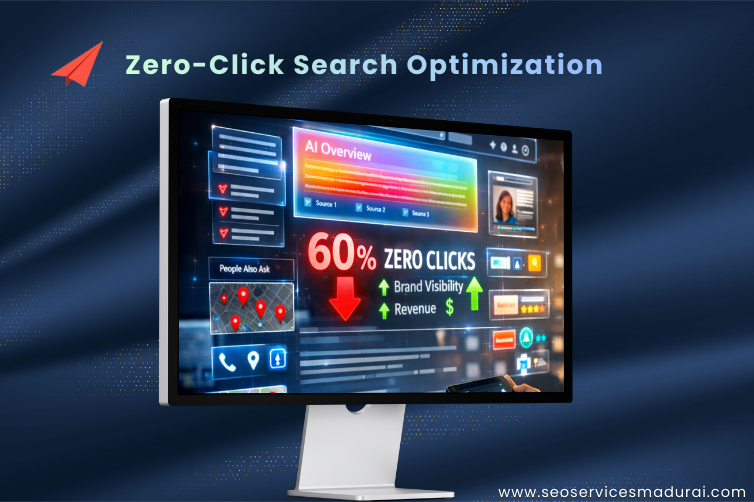
The foundation of search marketing has cracked. For decades, SEO success meant one thing: driving clicks from search results to your website. Businesses invested millions optimizing content, building backlinks, and improving rankings—all to capture that precious click. In 2026, that entire model has collapsed. According to the latest industry data, approximately 60 percent of Google searches now end without a single click to any website, and on mobile devices that figure jumps to 66 percent.
The numbers paint an alarming picture for traditional SEO practitioners. When AI Overviews appear in search results, organic click-through rates plummet by 47 percent according to recent analysis. Only 1 percent of users click on sources cited within AI Overviews despite seeing those citations. Major publishers like HubSpot have reported traffic declines of 70-80 percent for content types that AI can effectively summarize. The question facing every business owner in Madurai, Tamil Nadu, and across India isn’t whether zero-click search will impact them—it’s how quickly they’ll adapt before competitors gain insurmountable advantages.
Yet here’s the paradox: while traffic declines alarm many marketers, forward-thinking businesses are experiencing record revenue growth. Companies like NerdWallet and HubSpot report decreased organic traffic alongside increased revenue. At GegoSoft, we’ve witnessed this counterintuitive phenomenon firsthand—businesses optimizing for zero-click visibility build brand authority and customer trust that converts more effectively than traditional traffic ever did. This comprehensive guide reveals how to thrive in the zero-click era dominating search results in 2026.
Understanding the Zero-Click Search Revolution
Zero-click searches occur when users find complete answers directly on search engine results pages without visiting any websites. This happens through various SERP features including AI-generated summaries called AI Overviews, featured snippets providing direct answers at position zero, Knowledge Panels displaying comprehensive entity information, People Also Ask boxes answering related questions, local packs showing map results with business details, and direct answer boxes for calculations, definitions, or facts.
The growth trajectory of zero-click searches has been dramatic and accelerating. Analysis from SparkToro shows that in the United States, approximately 58.5 percent of searches resulted in zero clicks, while European Union searches reached 59.7 percent. More recent data from 2025 indicates this has climbed to 60 percent overall, with searches triggering AI Overviews showing a staggering 83 percent zero-click rate—meaning 8 out of 10 users get answers directly without visiting any website.
The shift stems from Google’s fundamental business model evolution. While the company built its empire on sending users to the best websites, it now prioritizes keeping users within its ecosystem. AI Overviews synthesize information from multiple authoritative sources, providing comprehensive answers that eliminate the need to visit individual sites. From Google’s perspective, this creates superior user experience—fast, convenient answers without navigating multiple websites.
For businesses, this represents both existential threat and unprecedented opportunity. The threat is obvious: when users don’t click, traditional website traffic metrics plummet. Marketing strategies built entirely around attracting website visitors suddenly produce fraction of previous results. However, the opportunity lies in understanding that visibility doesn’t require clicks, and brand authority can be established through SERP presence alone.
The Visibility-First Paradigm Shift
Success in 2026 demands completely reimagining SEO objectives and success metrics. Traditional SEO optimized for blue link clicks in ranked lists. Zero-click optimization prioritizes SERP visibility regardless of whether users click through. This fundamental shift changes everything about how we approach search engine optimization.
The new primary metric is brand recall rather than click-through rate. When your business appears in AI Overviews for 10,000 queries monthly, you’re effectively running a high-value billboard campaign at no cost. Users who see your brand repeatedly cited as the authority develop trust that influences future purchasing decisions. Research shows that when users eventually decide to buy, they statistically favor brands they saw in AI summaries—even if they never clicked those citations.
Position zero—whether achieved through featured snippets or AI Overviews—occupies the entire top fold of mobile screens. Owning this space provides powerful authority signals that imply Google endorsement. Even without generating clicks, this placement builds trust and credibility that translates into business outcomes through brand search increases, direct traffic growth, higher conversion rates, and premium pricing power.
The measurement framework must evolve beyond traditional traffic metrics. Track search visibility through impressions, branded query growth, and SERP feature presence using Search Console. Monitor on-SERP actions including calls, direction requests, messages, bookings, and profile visits. Assess reputation signals through review volume, recency, and sentiment. Evaluate lead quality metrics like close rates, sales cycle length, and revenue per lead. And conduct AI inclusion checks monitoring brand mentions and answer capture frequency.
Optimizing for Featured Snippets and Position Zero
Featured snippets remain the most valuable SERP real estate for zero-click optimization. These highlighted answer boxes appear above traditional results, earning the coveted “position zero” designation. Securing featured snippets requires strategic content structuring that makes your information easily extractable for Google’s algorithms.
Start by identifying high-value questions your target audience asks related to your business, products, or industry expertise. Use tools like Answer The Public, Google’s People Also Ask sections, and keyword research platforms revealing question-based queries. Focus on questions with significant search volume but manageable competition—these represent opportunities where well-optimized content can capture snippets.
Structure content explicitly answering questions using clear formatting that algorithms can parse. Place the question as an H2 or H3 heading, provide a concise 40-60 word answer immediately following the question, then elaborate with supporting details, examples, and context below. This structure serves both users seeking quick answers and algorithms extracting snippet content.
Utilize formatting elements that enhance snippet eligibility including numbered lists for step-by-step processes, bulleted lists for features or comparisons, tables for pricing or specifications, and definition paragraphs for “what is” queries. Each format serves specific query types more effectively.
Implement FAQ schema markup providing explicit signals about question-answer content structure. Schema tells Google exactly which content portions answer which questions, dramatically increasing snippet capture likelihood. For service businesses offering digital marketing, comprehensive FAQ sections addressing common client questions become snippet goldmines.
Monitor featured snippet opportunities in Search Console identifying queries where you rank on page one but don’t hold the snippet. These represent immediate optimization opportunities—your content already demonstrates relevance, requiring only structural improvements to capture position zero.
Mastering AI Overview Inclusion and Citations
AI Overviews represent the fastest-growing SERP feature, appearing on billions of searches and fundamentally changing discovery dynamics. While you cannot directly control AI Overview generation, specific optimization strategies dramatically increase citation likelihood.
Prioritize Experience, Expertise, Authoritativeness, and Trustworthiness signals because AI systems preferentially cite content demonstrating clear authority. Create comprehensive resources thoroughly addressing topics from multiple angles, share specific case studies with concrete metrics and outcomes, provide original research or proprietary data unavailable elsewhere, and include author credentials and expertise indicators.
The “Information Gain” principle determines citation worthiness. According to 2026 algorithmic analysis, Google evaluates whether content contains unique value beyond what already exists online. Generic summaries of existing information get synthesized by AI without citation. Content offering proprietary insights, contrarian expert opinions, or exclusive data earns “Citation Cards” linking to original sources.
Structure content for machine readability using clear, declarative statements AI can extract. Avoid complex sentence structures with ambiguous references. Use explicit subject-object constructions. When stating facts, include specific data points that AI models can anchor to—for example, “65% of searches are zero-click” provides a concrete statistic requiring source attribution rather than generic claims AI can synthesize without citation.
Implement comprehensive structured data across all content using Schema.org markup for articles, FAQs, how-to guides, and author information. Proper schema provides explicit signals helping AI systems understand content type, context, and purpose. This technical foundation makes your content more accessible to AI indexing systems.
Maintain absolute consistency across your web presence ensuring your business name, address, phone number, services, and messaging remain identical across your website, Google Business Profile, social media accounts, industry directories, and third-party mentions. AI systems cross-reference information verifying accuracy—inconsistencies damage trust and reduce citation likelihood.
Building Entity-Based Authority for Zero-Click Success
Modern search understands entities—specific people, places, things, concepts, or ideas—rather than just keywords. Entity-based optimization establishes your business as the recognized authority on specific topics within Google’s Knowledge Graph, the system connecting entity facts and relationships.
Develop comprehensive topic expertise rather than scattered content across random subjects. Create detailed topic clusters with pillar pages covering broad topics thoroughly and cluster content addressing specific subtopics in depth. Strategic internal linking connects related content demonstrating subject mastery. This concentrated expertise signals authority that algorithms recognize and AI systems preferentially cite.
Earn mentions and citations from authoritative external sources including industry publications, educational institutions, government websites, established news outlets, and reputable directories. Each quality mention from trusted sources validates your entity authority. Strategic press release distribution can generate these authoritative citations.
Claim and optimize your Google Business Profile comprehensively because it serves as your primary entity definition in Google’s Knowledge Graph. Complete every profile section, maintain accurate current information, upload high-quality original photos regularly, respond to all reviews professionally, and post updates consistently. This comprehensive profile establishes entity legitimacy.
Build knowledge panel eligibility for your brand through Wikipedia presence if possible, consistent citations across authoritative sources, comprehensive structured data implementation, and strong social media presence with verified accounts. Knowledge panels provide exceptional zero-click visibility establishing immediate credibility.
Optimizing for People Also Ask Boxes
People Also Ask boxes appear in 40-60 percent of searches, particularly for informational queries. These expandable question sections provide additional zero-click opportunities when users explore related topics without leaving the SERP.
Structure content in explicit Q&A formats where questions serve as headings and answers follow immediately. Each question-answer pair becomes a potential PAA inclusion. Use natural language reflecting how people actually phrase questions when speaking or typing searches.
Provide complete yet concise answers in 150-300 words that satisfy initial curiosity while encouraging deeper exploration. PAA answers should be self-contained but not exhaustive—giving enough information to be helpful while suggesting visiting your site provides additional valuable details.
Address related questions comprehensively within single pieces of content. When you thoroughly cover a topic from multiple angles, you increase chances of appearing in multiple PAA entries within the same results. This multiplication effect amplifies visibility exponentially.
Monitor existing PAA boxes for your target keywords identifying which questions appear most frequently. Create dedicated content addressing these specific questions if you haven’t already. This reactive optimization ensures you’re targeting questions with proven search demand.
Local Zero-Click Optimization Strategies
Local searches particularly exemplify zero-click dynamics, with users frequently finding necessary information—business hours, phone numbers, directions, reviews—directly in local packs without visiting websites. For businesses serving local markets like Madurai, local SEO optimization must prioritize SERP presence over website traffic.
Perfect your Google Business Profile because it serves as your primary local zero-click asset. Use precise business categories matching what you actually do, maintain detailed service listings with descriptions, upload diverse high-quality photos including exterior, interior, products, team, and work samples, respond to every review quickly and professionally, and post regular updates about news, offers, and events.
Encourage action-oriented profile interactions that Google tracks including phone calls directly from the profile, direction requests to your location, message inquiries through Business Profile messaging, and website clicks for those wanting deeper information. These on-SERP actions demonstrate business value even without traditional website traffic.
Optimize for “near me” and location-specific queries ensuring your NAP information remains absolutely consistent across all online platforms. Inconsistencies confuse algorithms and damage local rankings. Create location-specific content pages for each area you serve, naturally incorporating geographic keywords.
Build comprehensive local citation networks ensuring your business appears in Google, Bing Places, Apple Maps, Yelp, industry-specific directories, local chamber of commerce listings, and regional business associations. Each citation reinforces your local entity authority.
Generate steady review flow on multiple platforms including Google, Facebook, industry-specific review sites, and local directories. Review volume, recency, and sentiment all influence local zero-click visibility. Systematic review generation processes ensure consistent positive feedback.
Content Strategies for Zero-Click Dominance
Not all content performs equally in zero-click environments. Strategic content development focusing on specific formats and approaches dramatically improves SERP feature inclusion rates.
Create definitive resource guides that thoroughly address important topics from every angle. Comprehensive pillar content covering subjects exhaustively demonstrates expertise that algorithms recognize. These substantial resources become go-to references that AI systems cite repeatedly.
Develop step-by-step tutorials and how-to guides using numbered lists and clear sequential structure. Procedural content naturally fits featured snippet and AI Overview formats. Break complex processes into digestible steps with clear actions.
Produce comparison content evaluating options, products, or approaches. Comparison tables work exceptionally well for featured snippets while providing genuine user value. Structure comparisons around features users care about most.
Generate original research and proprietary data that doesn’t exist elsewhere. Unique statistics, survey results, or industry analysis provide citation-worthy information that AI systems cannot synthesize from existing sources. Original research establishes true thought leadership.
Maintain FAQ sections addressing every question customers commonly ask. FAQ content serves multiple zero-click opportunities including featured snippets, PAA boxes, and AI Overview citations. Implement FAQ schema markup for maximum visibility.
Update existing high-performing content regularly ensuring currency and accuracy. AI systems favor fresh, current information over outdated content. Regular updates maintain zero-click competitiveness as topics evolve.
Measuring Success in a Zero-Click World
Traditional metrics like sessions and pageviews miss the complete picture in zero-click environments. Comprehensive measurement frameworks capture SERP visibility value beyond website traffic.
Track search impressions showing how often your content appears in search results regardless of clicks. Rising impressions indicate growing visibility even as click-through rates decline. Search Console provides impression data segmented by query, page, and device.
Monitor branded search volume revealing brand awareness growth driven by SERP presence. Users who repeatedly see your brand in AI summaries or featured snippets eventually search specifically for your business. Branded search increases demonstrate zero-click marketing effectiveness.
Measure SERP feature ownership tracking how frequently you appear in featured snippets, PAA boxes, local packs, and AI Overviews. Tools like Semrush and Ahrefs provide SERP feature monitoring capabilities. Growing feature presence indicates successful zero-click optimization.
Assess lead quality improvements even as volume potentially declines. Zero-click traffic often demonstrates higher intent because users who do click through after seeing AI summaries are actively seeking deeper engagement. Conversion rates, sales cycle length, and customer lifetime value may all improve despite traffic reductions.
Calculate revenue attribution beyond last-click models accounting for brand awareness and consideration phases occurring on SERPs. Multi-touch attribution models reveal zero-click contributions to eventual conversions that last-click attribution misses entirely.
How GegoSoft Guides Businesses Through Zero-Click Transformation
At GegoSoft, our comprehensive digital marketing services have evolved to prioritize zero-click optimization as central to modern search strategy. We help businesses throughout Madurai and across India adapt successfully to this fundamental shift.
Our zero-click optimization services include complete SERP feature audits identifying current visibility and opportunities, featured snippet optimization restructuring content for position zero capture, entity-based authority building establishing Knowledge Graph presence, local zero-click strategies maximizing Google Business Profile impact, and comprehensive measurement frameworks tracking beyond traditional traffic metrics.
We understand the psychological challenge of watching traffic decline while building stronger business foundations. Our approach balances maintaining existing traffic sources while aggressively expanding zero-click visibility creating diversified search presence resilient to continued algorithmic evolution.
Conclusion: Thriving When Clicks Disappear
Zero-click search represents the most profound transformation in search marketing history. The comfortable world where rankings directly translated to traffic and traffic automatically meant success has ended permanently. The businesses thriving in 2026 and beyond recognize that visibility creates value independent of clicks, and brand authority matters more than website sessions.
Success requires abandoning outdated traffic-first thinking and embracing visibility-first strategies. It means optimizing content for extraction rather than visitation, building entity authority that AI systems recognize and trust, and measuring impact through brand awareness and lead quality rather than pageview counts. The fundamental objective hasn’t changed—connecting with customers seeking what you offer—but the tactical execution has transformed completely.
Ready to master zero-click search optimization and maintain visibility as search continues evolving? Contact GegoSoft today to discuss how our expert team can help you adapt your search strategy for the zero-click era. Visit our contact page to schedule your zero-click strategy audit and discover how to thrive when traditional clicks disappear while competitors struggle to adapt.