
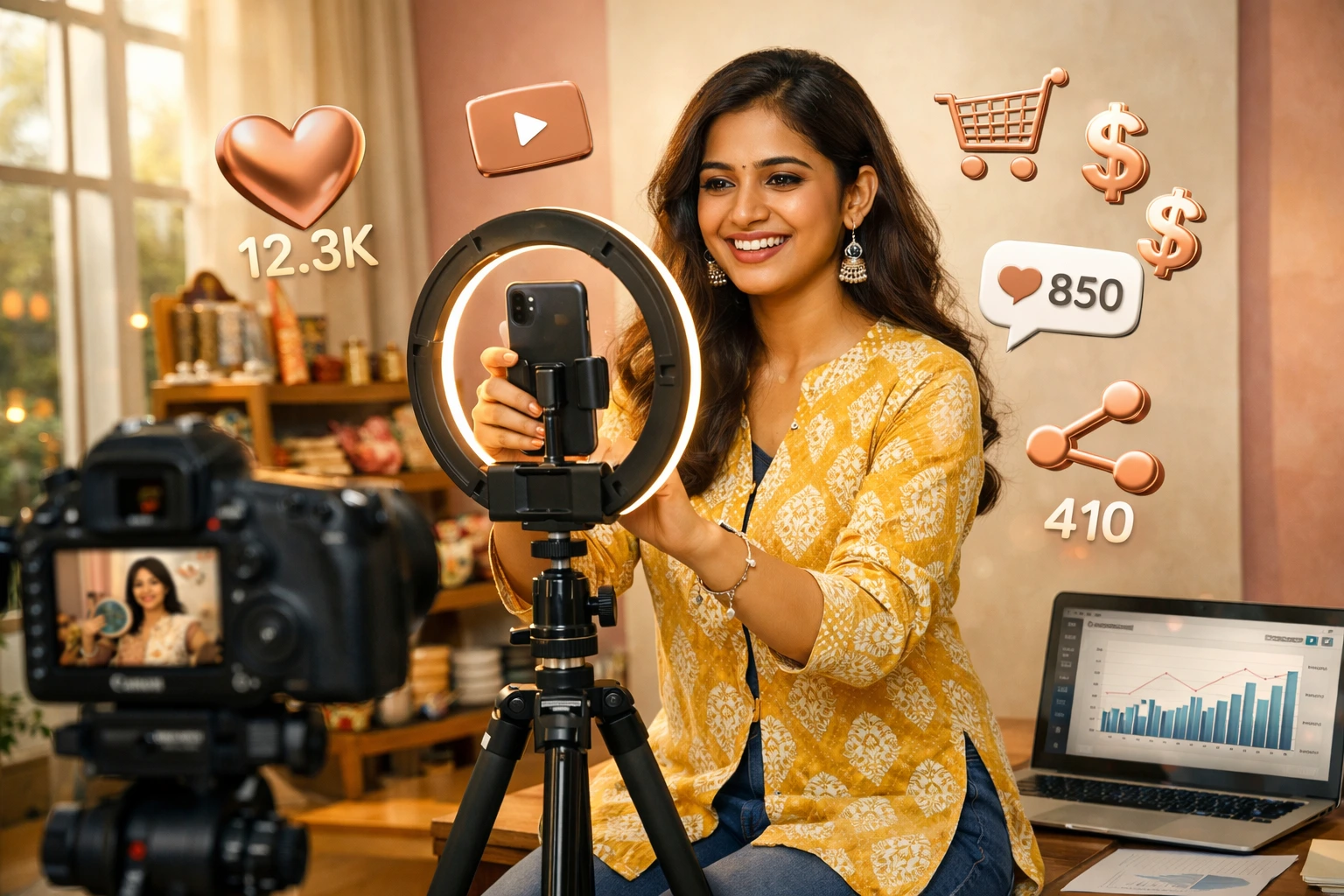
Traditional advertising has lost its power. Consumers skip commercials, ignore banner ads, and distrust corporate marketing messages. Meanwhile, recommendations from trusted voices on social media drive purchasing decisions with unprecedented influence. This fundamental shift has made influencer marketing essential for small businesses in Madurai, Tamil Nadu, and across India seeking cost-effective growth strategies.
The numbers validate this transformation. The influencer marketing industry will reach approximately $33 billion by 2025, with 49 percent of consumers making purchases at least monthly based on influencer recommendations. Most compellingly for small businesses, brands earn an average of $5.78 for every dollar invested in influencer partnerships—return on investment that rivals or exceeds traditional marketing channels.
At GegoSoft, we’ve guided numerous small businesses through successful influencer collaborations that generate awareness, build credibility, and drive measurable sales growth. This guide reveals how small businesses can leverage influencer marketing effectively without requiring celebrity budgets or extensive marketing experience.
Understanding Influencer Marketing’s Power for Small Businesses
Influencer marketing involves partnering with social media content creators who promote your products or services to their engaged audiences. Unlike celebrity endorsements requiring six-figure investments, modern influencer marketing emphasizes authentic relationships between creators and their communities.
The effectiveness stems from trust. While 92 percent of consumers trust recommendations from individuals over brands, only a fraction believe traditional advertising. When influencers genuinely recommend products they’ve personally used and value, their followers perceive these endorsements as friend recommendations rather than paid advertisements.
Small businesses benefit particularly from influencer marketing because it delivers targeted reach efficiently. Rather than broadcasting generic messages hoping to attract your ideal customer, influencer partnerships connect you directly with pre-qualified audiences already interested in your category. A local restaurant partnering with food bloggers reaches people actively seeking dining recommendations. A boutique collaborating with fashion influencers connects with style-conscious shoppers.
Cost-effectiveness represents another crucial advantage. Traditional advertising demands substantial minimum investments with uncertain returns. Influencer marketing accommodates modest budgets while maintaining effectiveness, especially when working with micro and nano-influencers who deliver exceptional engagement at affordable rates.
The Rise of Micro and Nano-Influencers
The influencer landscape has evolved dramatically beyond mega-celebrities with millions of followers. Today’s most effective partnerships often involve micro-influencers with 10,000-100,000 followers and nano-influencers with 1,000-10,000 followers.
Research shows 44 percent of brands now prefer partnering with nano-influencers compared to 39 percent in 2023. This shift reflects recognition that smaller influencers often deliver superior results for specific business objectives.
Micro and nano-influencers offer higher engagement rates because their followers feel genuine connections. While celebrity influencers might receive millions of likes, their engagement rates—likes and comments relative to follower count—typically range from 1-3 percent. Micro-influencers commonly achieve 5-10 percent engagement, while nano-influencers frequently surpass 10 percent.
Affordability makes these partnerships accessible to small businesses. While celebrity influencers command thousands or tens of thousands of dollars per post, micro-influencers often charge $500-1,000, and nano-influencers may accept product exchanges, modest fees of $100-500, or performance-based compensation.
Niche audience targeting provides precision impossible with broad-reach advertising. Influencers cultivate communities around specific interests—fitness, cooking, fashion, technology, parenting, local events. Partnering with influencers whose audiences match your customer profile ensures your message reaches genuinely interested prospects.
Finding the Right Influencers for Your Business
Successful influencer marketing begins with identifying creators whose audiences, values, and content styles align with your brand. Random partnerships with whoever charges least rarely generate meaningful results.
Start by defining your ideal influencer profile considering location relevance for local businesses, audience demographics matching your customers, content topics related to your products or services, engagement quality rather than just follower counts, and brand values alignment ensuring authentic partnerships.
Search social platforms strategically using location tags and local hashtags. For Madurai businesses, search terms like “Madurai food blogger,” “Tamil Nadu fashion,” or “South India travel” reveal local creators. Instagram, YouTube, and TikTok all offer robust search functionality for discovering relevant influencers.
Analyze potential partners thoroughly before reaching out. Review their content quality and aesthetic consistency, examine engagement rates and comment authenticity, verify audience demographics when possible, check previous brand collaborations for relevance, and assess whether their personality matches your brand voice.
Tools like Instagram Insights, YouTube Analytics, and third-party platforms help evaluate influencers objectively. However, manual review remains essential—numbers don’t reveal whether an influencer’s genuine passion and authentic voice will resonate with potential customers.
Consider competitors’ influencer partnerships for inspiration. Which creators promote similar businesses? What content formats work effectively? While you shouldn’t copy competitor strategies exactly, understanding proven approaches within your industry provides valuable direction.
Structuring Win-Win Influencer Partnerships
Approaching influencers professionally with clear proposals increases acceptance rates while establishing productive working relationships. Vague requests or entitled expectations damage partnership potential.
Craft personalized outreach messages demonstrating familiarity with their content. Reference specific posts you appreciated, explain why you believe partnership makes sense, clearly state what you’re offering—free products, monetary compensation, affiliate commissions, and outline expected deliverables—posts, stories, videos, reviews.
Be transparent about budget limitations. Most micro and nano-influencers work with small businesses regularly and appreciate honest communication. Many accept product exchanges early in their influencer careers or when genuinely interested in offerings.
Structure clear partnership agreements documenting content requirements including formats, platforms, and quantities, posting schedules and deadlines, compensation terms and payment timing, usage rights for repurposing content, disclosure requirements ensuring FTC compliance, and performance expectations if compensation is results-based.
Provide creative freedom within brand guidelines. Influencers understand their audiences better than you do. Overly prescriptive content requirements produce inauthentic posts that audiences recognize as forced advertising. Trust influencers to present your brand authentically within their natural content style.
Consider long-term relationships rather than one-off transactions. Repeated influencer mentions build stronger audience recognition and trust compared to single posts. Ongoing partnerships often deliver better per-post value as influencers become genuine brand advocates.
Maximizing Campaign Effectiveness
Strategic planning transforms influencer partnerships from random posts into coordinated campaigns driving measurable business results. Consider these optimization approaches for stronger performance.
Coordinate multi-influencer campaigns amplifying reach through diverse audiences. Rather than investing everything in a single influencer, partner with multiple smaller influencers covering different audience segments. This diversification reduces risk while testing various approaches simultaneously.
Time campaigns strategically around product launches, seasonal peaks, local events, or special promotions. Concentrated influencer activity during key periods creates momentum that single scattered posts cannot achieve. Multiple influencers posting during launch weeks generates buzz exceeding isolated mentions spread across months.
Provide unique discount codes or affiliate links tracking conversions specifically attributed to each influencer. This data reveals which partnerships drive actual sales versus merely generating awareness. Performance tracking enables data-driven decisions about which relationships deserve continued investment.
Repurpose influencer-generated content across your own social media channels, website, email marketing, and paid advertising. User-generated content from influencers often performs better than brand-created content because it feels authentic rather than promotional. Always secure usage rights before repurposing.
Encourage authentic reviews and experiences rather than scripted advertisements. The most effective influencer content shares genuine reactions, honest opinions, and personal stories. Followers recognize and appreciate authenticity while detecting and dismissing obvious advertisements.
Measuring Influencer Marketing ROI
Track specific metrics revealing campaign effectiveness and return on investment. Without measurement, you cannot identify what works or justify continued investment.
Monitor reach and impressions showing how many people saw influencer content. While these awareness metrics don’t directly prove sales impact, they demonstrate campaign scope and potential audience exposure.
Analyze engagement rates including likes, comments, shares, and saves. High engagement indicates content resonated with audiences beyond passive consumption. Comments particularly reveal whether viewers genuinely connected with your brand message.
Track website traffic from influencer links using UTM parameters in Google Analytics. This data shows how many visitors each influencer drove to your site and whether they behaved like qualified prospects—browsing products, reading information, or taking actions indicating purchase intent.
Measure conversion rates for specific actions including discount code usage, product purchases attributed to influencer campaigns, email signups from campaign landing pages, and consultation requests mentioning influencer content. These direct response metrics connect influencer activity to business outcomes.
Calculate customer acquisition cost dividing total campaign investment by customers gained. Compare this metric against other marketing channels evaluating whether influencer partnerships deliver competitive efficiency. ROI above $5 return per dollar invested indicates strong performance based on industry benchmarks.
Assess brand sentiment and awareness through surveys, social listening tools, and direct customer feedback. Sometimes influencer marketing’s primary value involves building reputation and recognition that converts into sales over longer timeframes rather than immediate transactions.
Common Mistakes and How to Avoid Them
Even well-intentioned influencer marketing efforts fail when businesses make predictable mistakes. Understanding common pitfalls helps you navigate partnerships successfully.
Choosing influencers based solely on follower counts ignores engagement quality and audience relevance. A local business benefits more from 5,000 engaged local followers than 500,000 disengaged international followers. Prioritize alignment over size.
Demanding overly specific content requirements strips authenticity from posts. Audiences follow influencers for their unique personalities and perspectives. When influencers simply read scripts, followers recognize inauthenticity immediately. Provide guidelines but trust influencers’ creative judgment.
Neglecting FTC disclosure requirements creates legal liability and damages credibility. Sponsored content must be clearly labeled with #ad, #sponsored, or similar disclosure. This transparency is legally required and ethically essential, and audiences appreciate honesty.
Expecting immediate sales from every post sets unrealistic expectations. Influencer marketing often works through awareness and consideration phases before conversion. Not everyone seeing an influencer post purchases immediately—some require multiple touchpoints before buying.
Failing to maintain consistent partnerships limits relationship-building benefits. One-off posts generate minimal lasting impact. Sustained collaborations over months build genuine audience familiarity with your brand that converts more effectively than single exposures.
Local Influencer Strategies for Madurai Businesses
Small businesses serving local markets benefit enormously from partnering with community-focused influencers. Local influencer strategies deliver qualified foot traffic and geographic relevance impossible with national creators.
Identify Madurai-based influencers across food and restaurant categories, retail and fashion sectors, lifestyle and entertainment topics, business and professional services, and cultural and event coverage. These creators command engaged local audiences actively seeking recommendations for businesses they can actually visit.
Attend local events where influencers gather—food festivals, fashion shows, business networking events, cultural celebrations. Building face-to-face relationships creates stronger partnerships than cold digital outreach.
Offer exclusive local experiences influencers can share with audiences. Restaurant previews of new menu items, boutique early access to collections, service demonstrations for lifestyle needs, or event VIP access all create compelling content opportunities while building genuine relationships.
Leverage local SEO benefits when local influencers mention your business name, location, and category. These social signals complement traditional local SEO efforts while driving direct referral traffic.
How GegoSoft Supports Small Business Influencer Success
At GegoSoft, our comprehensive digital marketing services include influencer marketing strategy and execution support for small businesses throughout Madurai and Tamil Nadu.
We help identify relevant micro and nano-influencers matching your brand, develop partnership proposals and negotiate agreements, create campaign strategies coordinating multiple influencers, track performance and measure ROI, and integrate influencer marketing with broader digital strategies.
Our local market expertise ensures partnerships align with Madurai’s unique cultural context and business environment. We understand which local influencers drive genuine results versus simply claiming large followings.
Conclusion: Your Influencer Marketing Action Plan
Influencer marketing in 2025 offers small businesses unprecedented opportunities to reach engaged audiences, build authentic credibility, and drive measurable growth—all within modest marketing budgets. The $5.78 average return per dollar invested validates this strategy’s effectiveness when executed thoughtfully.
Success doesn’t require celebrity partnerships or massive budgets. It requires identifying the right micro and nano-influencers whose audiences match your customers, building authentic relationships based on mutual value, creating campaigns allowing creative freedom within brand guidelines, and measuring results to optimize ongoing efforts.
Ready to leverage influencer marketing for your small business growth? Contact GegoSoft today to discuss how we can help you identify ideal influencer partners and develop campaigns delivering real business results. Visit our contact page to schedule your strategy consultation and discover your influencer marketing potential in 2025.