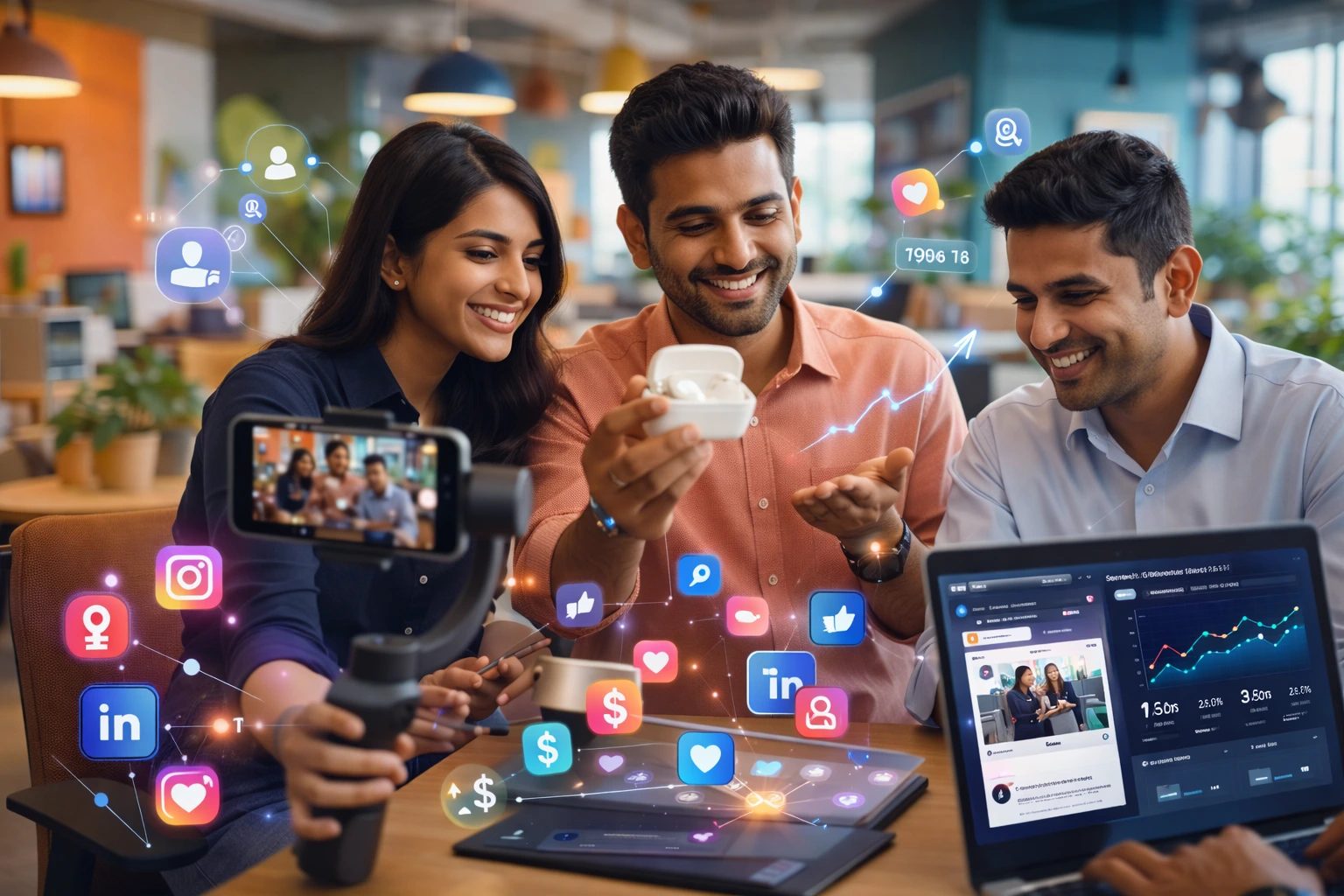
The influencer marketing landscape has reached an inflection point. While the creator economy continues exploding—now valued at approximately $250 billion and projected to double by 2027—forward-thinking brands are discovering their most authentic and cost-effective influencers have been on their payroll all along. Welcome to employee influencer marketing, the trend redefining brand building and content creation in 2026.
According to recent industry analysis, 74 percent of brands are moving budget into creator programs in 2026, but the smartest marketers are shifting focus from external content creators to internal employee advocates. Companies like Clay and Ahrefs have built entire marketing strategies around employees actively posting top-of-funnel content on social media, spreading company brand awareness while demonstrating genuine product expertise. Macy’s Style Crew program offers financial rewards to employees who share authentic product content that leads to sales, generating millions of views and substantial revenue.
For small businesses in Madurai, Tamil Nadu, and across India, employee influencer marketing presents unprecedented opportunities to build authentic brand presence without the costs associated with traditional influencer partnerships. At GegoSoft, we’ve helped numerous businesses develop employee advocacy programs that transform team members into powerful brand ambassadors. This comprehensive guide reveals everything you need to know about implementing successful employee influencer strategies in 2026.
Understanding the Employee Influencer Revolution
Employee influencer marketing leverages your own team members as content creators and brand advocates on social media platforms. Rather than hiring external influencers to promote your business, you empower employees to share their genuine experiences, insights, and enthusiasm about your company, products, and industry through their personal social media channels.
The shift toward employee influencers stems from several converging factors transforming the marketing landscape. Authenticity concerns have eroded trust in traditional influencer partnerships as consumers increasingly recognize sponsored content as advertising rather than genuine recommendations. When employees share content, audiences perceive it as more authentic because these individuals actually work with the products or services daily.
Cost efficiency represents another crucial driver. External micro-influencers typically charge between $500 to $1,000 per post, while nano-influencers command $100 to $500. Employee programs leverage existing payroll relationships, often compensating through incentive programs, recognition systems, or modest bonuses that cost significantly less than ongoing external partnerships.
Message authenticity improves dramatically when employees communicate brand value. External influencers can explain product features, but employees who use products daily, understand technical details deeply, solve customer problems regularly, and participate in company culture authentically provide richer, more credible content that resonates with audiences seeking genuine insights.
The reach multiplication effect creates exponential visibility. Each employee brings their own social network, collectively representing potentially thousands or tens of thousands of combined followers. When multiple employees share coordinated content, brands achieve reach impossible to match through single-channel marketing approaches.
The Business Case for Employee Influencers
The tangible benefits of employee influencer programs extend far beyond simple cost savings, driving measurable business outcomes across multiple dimensions.
Marketing cost reduction represents the most immediately visible benefit. When companies like Macy’s activate employee advocates through programs like Style Crew, they reduce reliance on expensive external influencer contracts while maintaining or increasing content volume and quality. The financial model shifts from per-post payments to performance incentives that align employee interests with business outcomes.
Content authenticity and quality improve when subject matter experts create content. Employees understand products and services at depth external influencers cannot match. A digital marketing agency employee explaining SEO strategies brings credibility that paid influencer cannot replicate. This expertise translates directly into content quality that educates audiences rather than simply promoting.
Recruitment and employer branding benefits emerge organically from employee content. When prospective employees research companies, they increasingly check social media for employee perspectives about workplace culture, leadership, and growth opportunities. Active employee advocacy signals positive workplace environment that attracts quality talent. The phenomenon of employees creating content about their work life has generated millions of views—one Wendy’s employee video making a Baconator garnered over three million views after the company reposted it.
Customer trust and social proof strengthen when real employees vouch for products and services. Consumers trust recommendations from people they perceive as unbiased more than obvious advertisements. Employee content provides social proof demonstrating that the people actually building, selling, and supporting products believe in their value.
The organic reach potential of employee networks often surpasses corporate account reach. Social media algorithms typically favor personal accounts over business pages, meaning employee posts often achieve better organic reach than identical content posted from company accounts. This algorithmic advantage multiplies content impact without additional spending.
Identifying and Recruiting Employee Influencers
Not every employee will become an active content creator, and that’s perfectly acceptable. Successful programs identify natural advocates who already demonstrate enthusiasm for sharing company updates, possess relevant social media presence, and communicate effectively with audiences.
Start by identifying employees who already engage actively on social media, demonstrate genuine enthusiasm about their work and your company, possess expertise or unique perspectives valuable to audiences, and show interest in content creation and brand building. These natural advocates form your program foundation, creating momentum that may inspire others to participate over time.
Approach recruitment transparently, clearly explaining program benefits for participants including recognition opportunities, potential financial incentives, skill development in content creation and personal branding, increased professional visibility, and networking opportunities. Emphasize voluntary participation—forced advocacy feels inauthentic and creates resentment rather than enthusiasm.
Address concerns proactively by discussing privacy boundaries and personal comfort levels, clarifying that participation is optional and flexible, establishing clear guidelines about appropriate content, and ensuring employees understand they maintain control over their personal accounts. Transparency and respect for boundaries build trust essential for program success.
Provide training and resources supporting employee success including content creation workshops teaching photography, video editing, and copywriting, brand guidelines explaining messaging framework and visual standards, platform-specific training for LinkedIn, Instagram, TikTok, or other relevant channels, and ongoing support through content ideas, asset libraries, and feedback mechanisms.
Create incentive structures motivating participation while maintaining authenticity. Macy’s Style Crew model offering financial rewards tied to sales generated by employee content provides clear performance incentives. Other approaches include recognition programs highlighting top contributors, career development opportunities for active participants, and modest stipends or bonuses acknowledging time investment.
Developing Content Guidelines and Best Practices
Balance between providing structure and maintaining authenticity represents the delicate art of employee influencer programs. Overly restrictive guidelines stifle creativity and produce robotic content that audiences reject. Insufficient guidance creates brand consistency issues and potential reputation risks.
Establish clear brand messaging framework defining core value propositions that should come through in content, prohibited topics that employees should avoid discussing publicly, tone and voice guidelines maintaining brand personality, and disclosure requirements ensuring transparency about employee-company relationships. These parameters create guardrails while leaving ample creative freedom.
Encourage authentic personal perspectives rather than corporate-speak. The power of employee content lies in genuine individual voices rather than scripted messages. Guidelines should encourage employees to share their honest experiences, include personal insights and perspectives, use their natural communication style, and acknowledge both successes and challenges authentically. This authenticity builds trust that polished corporate messaging cannot achieve.
Provide content topic ideas and inspiration helping employees overcome creative blocks including behind-the-scenes workplace content, product or service demonstrations explaining features, customer success stories they’ve witnessed, industry insights and trends they’re observing, and personal professional development stories. Regular topic suggestions keep content flowing without mandating specific messages.
Develop content calendars coordinating employee posts around campaigns, product launches, or events while maintaining flexibility for spontaneous content. Coordinated posting creates amplification effects where multiple employee voices reinforce similar messages simultaneously. However, avoid rigid scheduling that makes content feel forced or inauthentic.
Create approval workflows appropriate to your risk tolerance. Some companies require pre-approval for all employee content, while others trust educated employees to post responsibly with spot-check reviews. Consider starting with approval requirements, then transitioning to trust-based systems as employees demonstrate understanding of guidelines and appropriate judgment.
Platform-Specific Employee Influencer Strategies
Different social platforms serve different purposes and audiences, requiring tailored approaches for maximum effectiveness.
LinkedIn serves as the primary platform for B2B employee advocacy, where professional content from employees reaches decision-makers and industry peers. Encourage employees to share thought leadership articles commenting on industry trends, professional insights about their work and expertise, company news and achievements from their perspective, and content establishing personal brand alongside company brand. LinkedIn’s algorithm particularly favors employee posts about their employers, providing exceptional organic reach. Our social media marketing services help businesses optimize LinkedIn strategies for maximum impact.
Instagram works excellently for visual storytelling showcasing company culture, products, and lifestyle elements. Employees can share workspace aesthetic and design, product styling and photography, team events and celebrations, and customer interactions and testimonials. Instagram Stories and Reels provide particularly effective formats for authentic, casual content that humanizes brands.
TikTok has emerged as powerful platform for reaching younger demographics through short-form video content that’s educational, entertaining, or both. Employee content on TikTok might include quick tips and tutorials related to your industry, humorous takes on workplace situations, product demonstrations with personality, and trending content adapted to your business context. TikTok’s algorithm can propel employee content to massive reach when it resonates with audience interests.
YouTube serves long-form educational content where employees can establish deep expertise through comprehensive tutorials and how-to videos, detailed product reviews and comparisons, industry analysis and commentary, and interview-style content featuring team expertise. YouTube content provides lasting value, continuing to attract viewers months or years after publication.
Twitter functions effectively for real-time commentary, industry discussion, and thought leadership positioning. Employees can participate in relevant industry conversations, share quick insights and observations, respond to news and trends with company perspective, and engage with community members and potential customers. Twitter’s conversational nature allows employees to build genuine relationships with audiences.
Measuring Employee Influencer Program Success
Tracking program effectiveness requires monitoring both quantitative metrics and qualitative outcomes that demonstrate business impact.
Reach and impressions indicate the aggregate audience size employee content achieves. Track total impressions across all employee posts, unique audience reached through combined employee networks, and growth trends showing whether reach expands over time. Compare this aggregated employee reach against your corporate account performance to understand the multiplier effect.
Engagement metrics reveal how audiences respond to content through likes, comments, shares, and saves. Calculate engagement rates relative to reach, analyze which content types and topics generate strongest engagement, and identify top-performing employees whose approaches can be shared as best practices. High engagement indicates content resonates with audiences beyond passive consumption.
Website traffic and conversions driven by employee content represent direct business impact. Use UTM parameters tracking traffic from employee social posts, monitor conversion rates for this traffic segment, and calculate customer acquisition cost for employee-sourced customers. Compare these metrics against other marketing channels to assess program ROI.
Brand sentiment and awareness improvements demonstrate longer-term program value. Survey customers about how they discovered your brand, monitor social listening tools for brand mentions and sentiment, track branded search volume increases indicating growing awareness, and assess recruitment metrics including application quality and candidate knowledge. These indicators reveal program impact beyond immediate transactions.
Employee satisfaction and retention metrics may improve through participation. Active employee advocates often demonstrate higher engagement with their work, stronger alignment with company mission, and lower turnover risk. Track participant retention rates compared to non-participants, survey participants about program impact on job satisfaction, and monitor internal engagement metrics for program participants.
Overcoming Common Employee Influencer Challenges
Even well-designed programs encounter obstacles requiring proactive management and continuous refinement.
Employee hesitation about public visibility represents a common barrier. Many employees feel uncomfortable posting publicly, particularly in cultures where self-promotion isn’t encouraged. Address this through voluntary participation ensuring no pressure, starting with small commitments allowing gradual comfort building, providing training and support building confidence, and celebrating early adopters modeling success for others.
Content quality variation across participants reflects different skill levels and natural abilities. Some employees create compelling content naturally while others struggle. Support consistency through content templates and examples providing structure, feedback and coaching helping employees improve, highlighting strong examples for inspiration, and accepting that variation is natural while maintaining minimum standards.
Time constraints limit participation when employees perceive content creation as additional burden beyond regular responsibilities. Mitigate this by integrating advocacy into job responsibilities where appropriate, providing time during work hours for content creation, keeping participation expectations realistic and manageable, and offering tools and resources streamlining creation process.
Brand risk from employee mistakes or inappropriate content concerns many companies hesitant about employee programs. Manage risk through clear guidelines and training preventing most issues, approval workflows for sensitive topics or high-risk situations, insurance and legal protections addressing worst-case scenarios, and culture of open communication allowing employees to ask questions before posting.
Real-World Employee Influencer Success Stories
Learning from successful implementations provides practical insights and inspiration for developing your own program.
Macy’s Style Crew program empowers retail employees to become fashion influencers, sharing outfit styling and product recommendations through their personal social channels. Participants earn financial rewards tied directly to sales generated through their content. The program has generated millions of social media views, driven measurable sales increases, created authentic diverse representation across body types and styles, and improved employee satisfaction and retention among participants.
Technology companies including Clay and Ahrefs have built substantial followings through employee advocates who regularly post about products, industry insights, and company culture. These employees function as micro-influencers within specific tech and business niches, attracting leads through educational content, supporting sales through credibility and expertise, and enhancing employer brand attracting quality talent.
Professional service firms leverage employee expertise through thought leadership content on LinkedIn. Partners, consultants, and specialists share insights, research, and perspectives establishing both personal brands and firm reputation. This approach positions entire organizations as industry leaders through collective employee voices rather than single corporate message.
How GegoSoft Supports Employee Influencer Programs
At GegoSoft, our comprehensive digital marketing services include employee influencer program development and management, helping businesses throughout Madurai and across India unlock their team’s advocacy potential.
We provide complete program design including strategy development aligned with business goals, guideline creation balancing structure with creative freedom, platform selection identifying optimal channels for your audience, incentive structure development motivating sustainable participation, and training programs equipping employees with content creation skills.
Our ongoing support services include content calendar development coordinating employee posts strategically, asset creation providing high-quality photos, videos, and graphics employees can use, performance tracking measuring program impact and ROI, and continuous optimization refining approaches based on performance data.
We understand that small business employee advocacy differs from enterprise programs. Our approaches scale appropriately for businesses with five team members or fifty, accommodating realistic budget constraints while delivering measurable results.
Conclusion: Empowering Your Greatest Brand Advocates
Employee influencer marketing represents one of the most powerful yet underutilized marketing strategies available to businesses in 2026. While external influencer partnerships will remain valuable for specific campaigns, the authentic voices, deep expertise, and cost efficiency of employee advocates offer advantages external creators cannot match.
The businesses building strong brands and loyal communities in 2026 will be those recognizing their employees as their greatest marketing asset. By empowering team members to share their genuine experiences and expertise, you transform marketing from one-way broadcast to authentic conversation, from expensive external partnerships to efficient internal advocacy, and from generic messaging to credible expertise.
Ready to transform your employees into powerful brand ambassadors? Contact GegoSoft today to discuss how we can help you develop and launch an employee influencer program that drives authentic engagement and measurable business results. Visit our contact page to schedule your program strategy consultation and discover how to unlock your team’s advocacy potential in 2026.