Introduction
There is a common belief that marketing success is directly proportional to budget. The bigger the spend, the better the result. In 2026, that assumption is being dismantled every day by small businesses that compete — and win — against brands with far greater resources.
The reason is simple: digital marketing rewards relevance over reach. And relevance is something a small, focused business can create better than a large, generalised corporation.
The Structural Advantages Small Businesses Already Have
Before discussing tools and tactics, it is worth recognising what small businesses inherently possess that large companies spend millions trying to recreate.
Speed: When a trend emerges or a customer need shifts, small businesses can respond in hours. A corporation requires weeks of approvals and committee reviews to make the same change.
Authenticity: People buy from people. A small business owner who shows their face, tells their story, and communicates directly with customers creates a level of trust that no brand campaign can manufacture.
Specificity: A small business can dominate a niche. Instead of competing for every customer, it serves a defined segment better than anyone — and becomes the obvious choice within that group.
Using AI Tools to Compete at Scale
In 2026, AI levels the playing field in measurable ways. Tools that were once enterprise-only — advanced audience segmentation, automated personalisation, predictive analytics — are now available at price points accessible to small businesses.
You can use AI to analyse which keywords your competitors are ranking for and identify the gaps they have missed. You can use AI to generate targeted content for a specific local audience. You can use AI to automate your follow-up sequences, ensuring no potential customer slips through without a touchpoint.
This is not about imitation — it is about being smarter in the areas that matter most.
The Niche Strategy That Outperforms Broad Campaigns
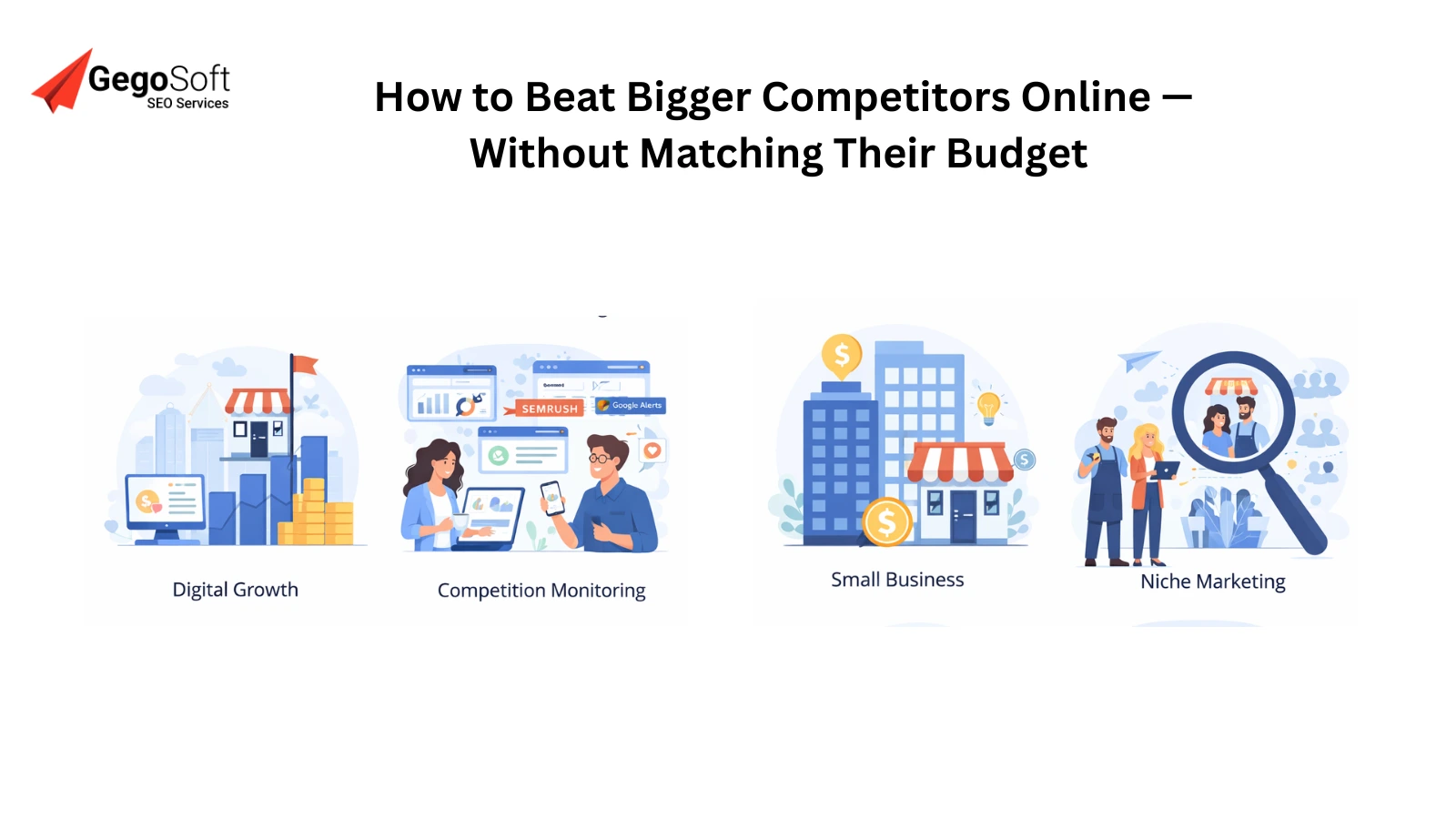
Large companies advertise broadly because they serve broad audiences. This is actually a weakness you can exploit. By focusing your digital marketing on a clearly defined customer segment — say, family-run restaurants in your city, or women-owned boutiques in a specific region — you can create content, ads, and offers that speak directly to that audience’s specific problems.
Broad targeting gets average results. Precise targeting gets exceptional ones.
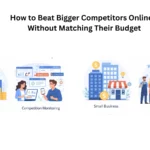
Monitoring Competitor Moves Without Spying
Competitive intelligence is a legitimate marketing discipline. Tools like SEMrush, Ahrefs, and Google Alerts allow you to track what your competitors are publishing, which keywords they are targeting, and what changes they are making to their websites. This information helps you identify gaps in their strategy and position yourself in spaces they are not serving.
Conclusion
Competing against larger businesses is no longer an uphill battle when you use the tools and strategies that 2026’s digital landscape provides. Your size is not a disadvantage — it is a strategic asset when used correctly. Focus your energy on a specific audience, use AI tools to execute with precision, and respond to market changes faster than any large company can. The businesses growing fastest right now are not the biggest ones. They are the sharpest.